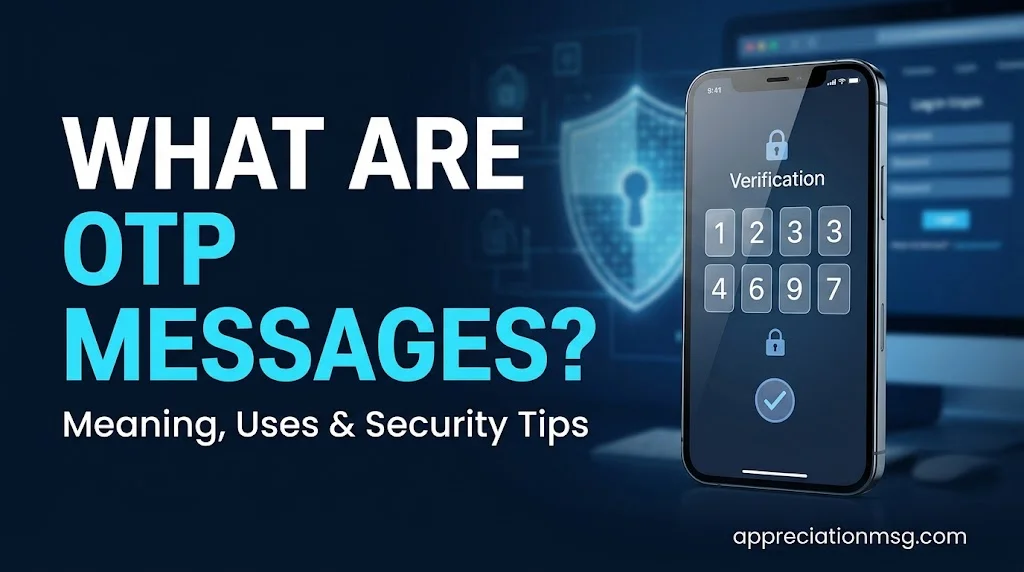
What are OTP messages? They are short texts or emails with a one-time password (also called a verification code). The code proves it’s really you. It works once, then it’s useless.
You see them when you log in to a bank, confirm a purchase, or reset a password. This guide explains the OTP meaning, how the codes work, where they’re used in the USA, and how to spot fake ones. One rule first: never share your OTP with anyone.
Table of Contents
What Are OTP Messages and How Do They Work?
An OTP message carries a code made just for one login or one action. Here is how that code travels from a server to your screen.
OTP stands for one-time password. Some sites say one-time passcode. It’s the same thing.
An OTP is a form of two-factor authentication (2FA). Your password is the first factor. The code is the second. A thief with your password still can’t get in without it.
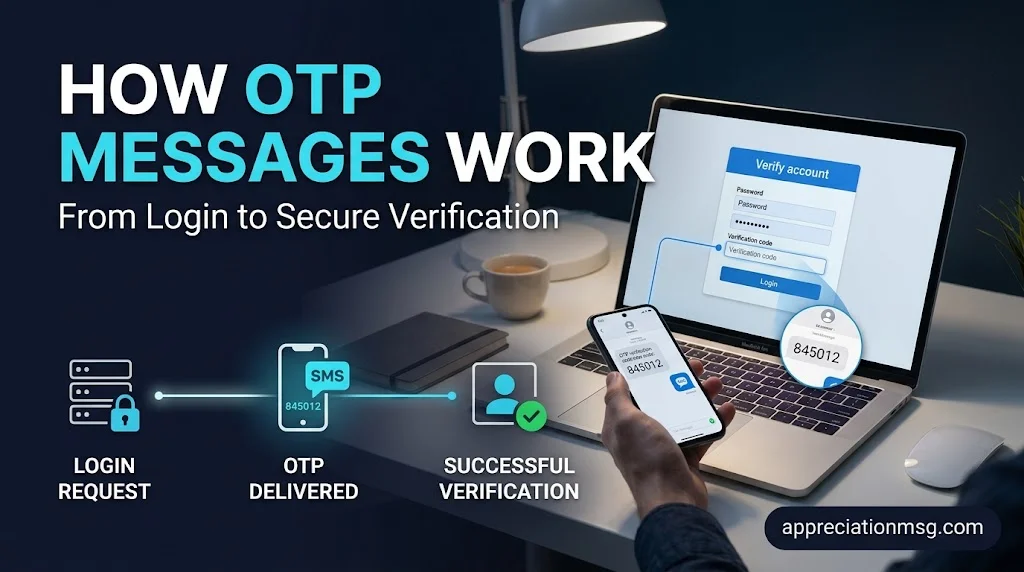
Here is the usual flow
You try to log in or approve a payment.
The server creates a random code.
The code reaches you by SMS, email, voice call, or app.
You type the code in.
The server checks it and lets you in.
A typical OTP text message reads: “Your code is 482913. It expires in 5 minutes.”
How long is an OTP? Most are 6 digits. That gives 1,000,000 possible combinations. The HOTP standard (RFC 4226) requires at least six digits.
Two methods create these codes
HOTP (hash-based): A counter drives it. The code stays valid until it’s used.
TOTP (time-based): The clock drives it. The code usually lasts 30 to 60 seconds. See RFC 6238.
Why do OTPs expire?
A code that never expires is just another static password. Short life and single use also stop replay attacks, where a hacker reuses a stolen code.
Types of OTP Messages and How You Receive Them
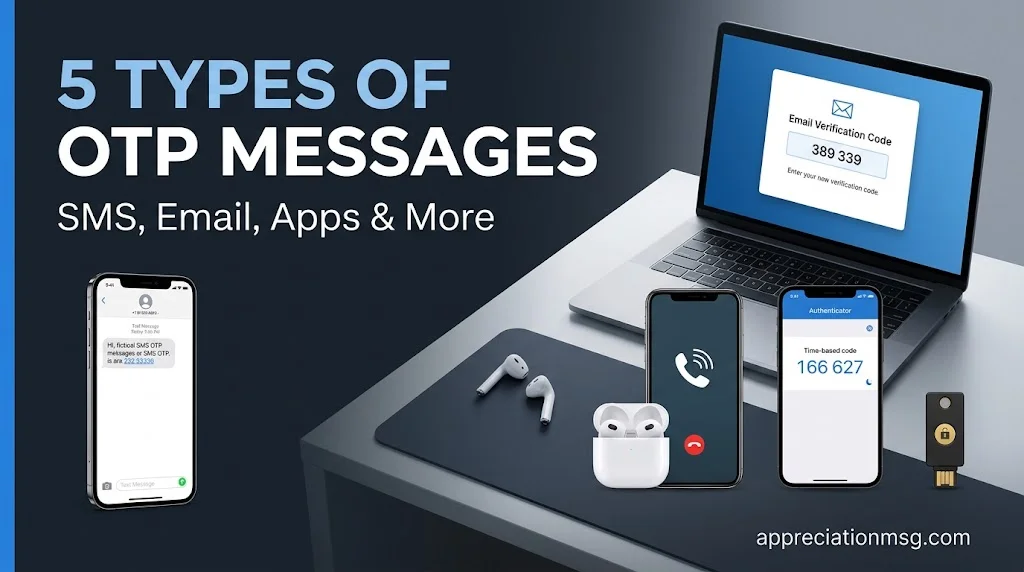
OTP codes reach you in several ways. Each has its own strengths and weak spots.
Method
Speed
Security
Good to know
SMS OTP
Very fast
Medium
Works on any phone. Depends on your carrier.
Email OTP
Slower
Medium
Only as safe as your email account.
Voice call OTP
Fast
Medium
Helpful with weak signal or vision needs.
WhatsApp or push
Fast
Medium to high
Needs the app installed.
Authenticator app
Instant
High
Works offline. Resists SIM swapping.
Hardware token
Instant
Very high
A physical key, like a YubiKey.
SMS is the most common choice in the USA. It’s quick and needs no extra app. But a text travels over the phone network, so criminals can target it.
Authenticator apps like Google Authenticator, Microsoft Authenticator, and Authy make TOTP codes on your device. No text is sent, so there’s nothing to intercept.
Security experts call apps and keys soft tokens and hard tokens. A soft token is software. A hard token is a device you hold.
Common Uses of OTP Text Messages in the USA
You meet OTP verification codes almost every day. Any site that holds money or private data may use one.
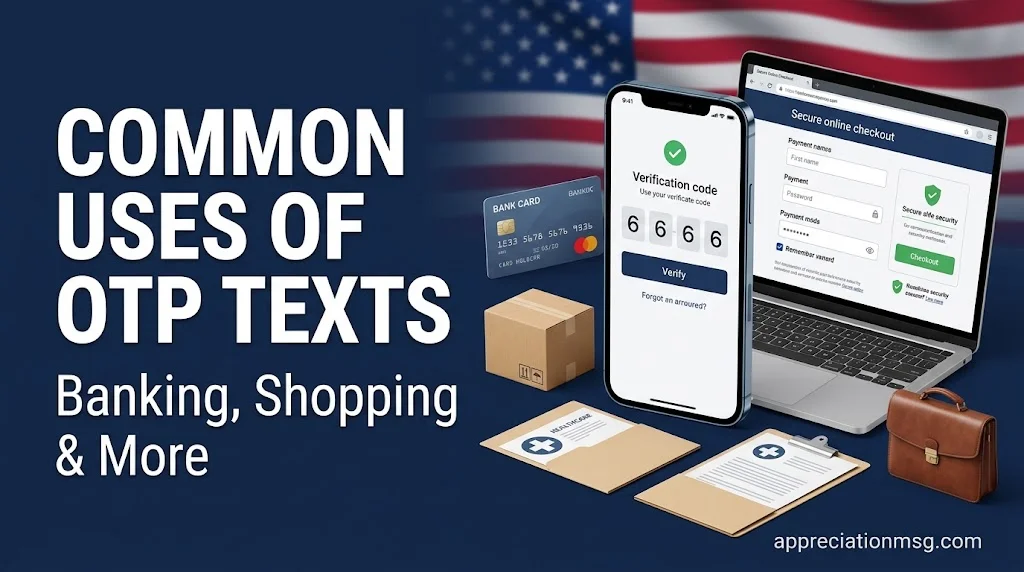
Here are the main places
Banking: Logins, wire transfers, card purchases, and loan requests.
Online shopping: Checkout, delivery apps, and passwordless login.
Healthcare: Patient portals that hold records protected by HIPAA.
Government and insurance sites: Identity checks before you view files.
Apps and social media: New device logins and password resets.
Workplaces: Staff access to company tools and dashboards.
Many of these codes come from short numbers, such as five or six digits. Banks and big brands often use them.
What if the code is not about security?
In slang, OTP can mean “one true pairing.” That’s a fan term for a favorite couple. Context tells you which meaning is in play.
While OTP messages are designed to keep your accounts secure, not every message needs to be serious or security-related. If you’re looking for a fun way to make someone’s special day memorable, explore these funny birthday messages that will make anyone laugh and add a little humor to your birthday wishes.
OTP Message Security Tips to Stay Safe
OTP codes make accounts much harder to break into. They aren’t perfect, so a few habits matter.
Do OTPs really help?
Yes. Microsoft reported that multi-factor authentication can block over 99.9% of account compromise attacks. A White House cyber official also said 2FA can cut cybercrime by up to 80 to 90 percent.
Even so, criminals use these tricks
SIM swapping: A thief talks your carrier into moving your number to their SIM. Your texts then go to them.
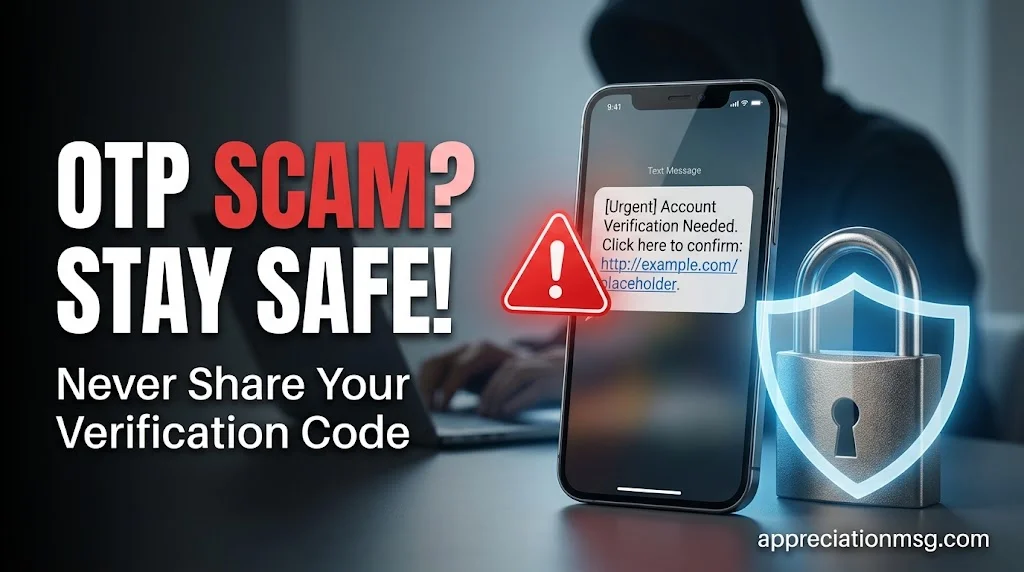
Phishing and spoofing: A fake agent calls or texts and asks you to read out your code.
Push-bombing: A hacker floods you with login requests, hoping you tap “approve.”
SS7 flaws: Old phone-network weak spots let skilled attackers read texts. This is rare.
How to spot a fake OTP message
You didn’t ask for the code.
The text feels urgent or scary.
Someone asks you to share the code.
The message holds a strange link.
What if you get a code you didn’t request?
Someone may have typed your number or email at a login page. Don’t share the code. Change your password, then check recent sign-ins.
Your safety checklist
Never share an OTP, even with “support.”
Set a PIN or passphrase on your carrier account.
Choose an authenticator app when a site offers one.
Forward scam texts to 7726 (SPAM).
Report scams at ReportFraud.ftc.gov.
NIST, the US standards agency, treats SMS codes as a “restricted” method. That doesn’t mean “unsafe.” It means apps and keys are stronger when you have the choice.
For businesses
Set short expiry windows.
Limit OTP requests and wrong entries.
Store secret keys safely.
Use SPF, DKIM, and DMARC on email.
Say plainly in each message that staff will never ask for the code.
FAQs
What can someone do with my OTP?
They can log in to your account, approve a payment, or reset your password. That’s why you should never share it. If you did, change your password right away and call your bank or the company.
What is the difference between OTP and SMS?
OTP is the code. SMS is one way to send it. The same code can also arrive by email, voice call, or an authenticator app.
What is OTP in Gen Z?
In slang, OTP means “one true pairing.” Fans use it for a couple they love. It has nothing to do with security codes.
What are OTP messages on Android?
They are verification codes that reach your phone in Google Messages or another app. Android often shows a copy button or fills the code in for you.
How do I find my OTP on my phone?
Check your text messages first. Then look at your notification bar, your email, and your authenticator app. Also check any spam or “filtered” folder. Act fast, since codes expire.
How to stop fake OTP messages on Android?
Don’t reply or tap links. In Google Messages, open the text and choose Block & report spam. Turn on Spam protection in settings, and forward the text to 7726. Then secure the account the code came from.
Conclusion
OTP messages add a simple, strong layer to your account security. The code is private, short-lived, and good for one use. Use an authenticator app when you can, watch for fake texts, and never share your OTP.
A R Gujjar is a passionate writer sharing appreciation, heartfelt, funny, and thank-you messages to help readers express their feelings with meaningful words.












1 thought on “What Are OTP Messages? Powerful Guide to Their Meaning, Uses, and Security Tips”